
Cornhole League - Board Games
TapNationSports
4.310.48K Reviews
- Version
- 1.25.4
- Installs
- 10.00M
- Age Rating
- Everyone
Screenshots
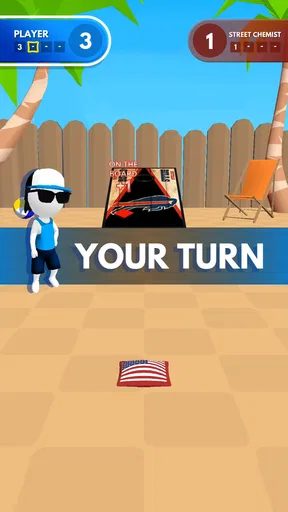
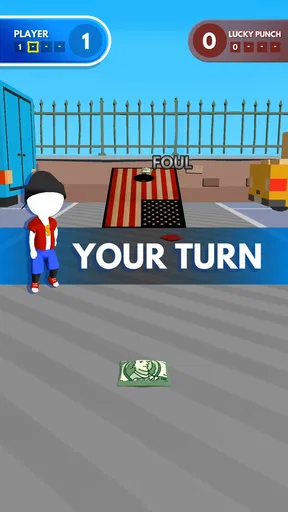
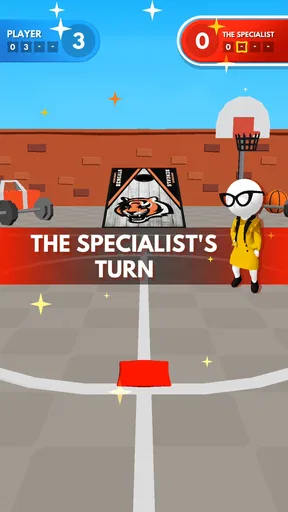
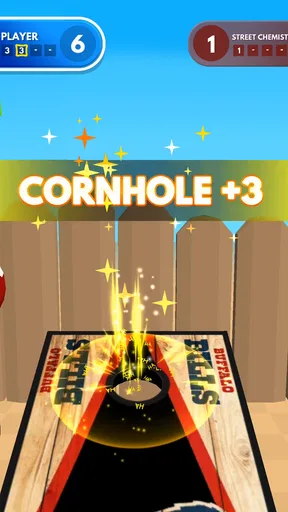
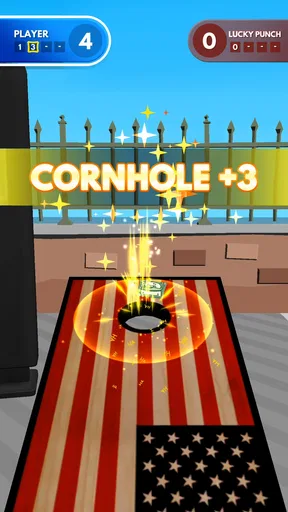
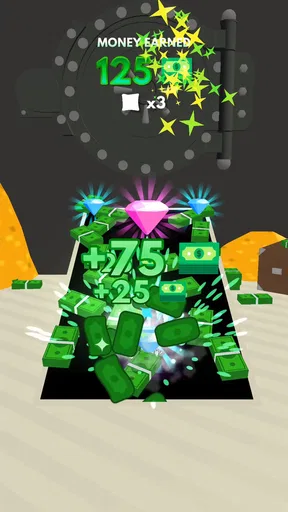
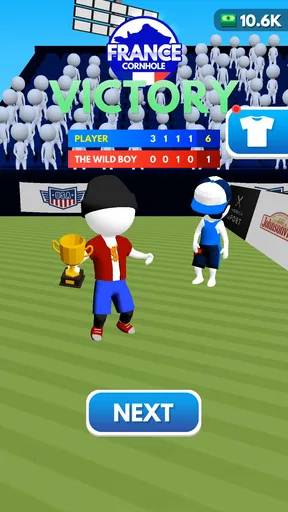
Our Review of Cornhole League - Board Games
 Analysis by Appyee
I picked up Cornhole League expecting a simple time-killer, and that is exactly where it makes the best first impression. It turns the familiar lawn game of tossing a beanbag toward a raised board into a compact sports game for Android and iOS. The basic idea is easy to understand immediately, but aiming well takes more patience than the cheerful presentation suggests. I found myself making one more attempt not because the controls were complicated, but because a slightly better throw always felt within reach.
That balance matters. A digital version of cornhole can become dull if every round feels identical, or frustrating if the game hides the outcome behind awkward controls. Here, the appeal comes from learning how much to adjust each throw and from seeing whether a careful approach beats a rushed one. It is a free game from TapNation, rated for Everyone, and it works best as a relaxed sports experience rather than a serious simulation.
How the first goals create a reason to keep playing
The opening appeal is straightforward: throw the bag, score, and try to improve the result. I did not need a long explanation to understand what I was supposed to do, which makes the game suitable for short sessions and for people who have never played cornhole in real life. The early goals are less about mastering a large rulebook and more about building confidence with the throwing motion.
That simplicity is useful on a phone. I can start a round while waiting for an appointment, play a few attempts, and stop without feeling that I have abandoned a complicated campaign. At the same time, the game gives each throw enough importance to prevent it from becoming a completely mindless tap. A bag that looks almost perfect can still miss, and that small uncertainty keeps the next attempt interesting.
My advice for new players is to resist the temptation to throw as quickly as possible. I found better results by treating each attempt as a separate adjustment: first judge the direction, then think about strength, and only afterward worry about speed. That habit is more useful than trying to memorize one universal gesture, because the right movement depends on the situation in front of you.
The early experience also answers an important practical question: can someone enjoy it without knowing official cornhole strategy? Yes. The game presents the activity in a friendly way, so prior knowledge is not necessary. However, players who already enjoy physical cornhole may notice that the mobile version emphasizes repeatable input and immediate feedback rather than the feel of a real bag landing on a wooden board.
Small improvements become the main progress signal
What kept me interested was not a dramatic story or a complicated character build. It was the steady feeling that my throws were becoming more deliberate. A miss that once seemed random started to feel understandable after I paid attention to the angle and force I was using. That is a modest form of progression, but it suits this kind of game.
The most useful progress signal is personal consistency. One lucky throw does not prove much; several controlled throws tell me that I am learning the game. I began to judge a session by how often I could place the bag where I intended, not only by the final score. That mindset makes the experience less punishing and gives beginners a clearer way to improve.
There is also a practical workflow that works well for casual play. I use the first few attempts to settle into the controls instead of immediately chasing a perfect result. If a throw lands short, I make one change rather than changing direction, power, and timing all at once. This simple approach turns failure into useful feedback and prevents the familiar mobile-game habit of blaming the controls after every miss.
For players who like visible rewards, the attraction may depend on how strongly they respond to the game’s progression presentation. Cornhole League is not the right choice if you need a deep collection system, a long narrative, or a large strategic layer to stay engaged. Its progress is most satisfying when you enjoy refining a physical-style skill. I would describe it as a game about improving execution, not building a complex identity.
The difficulty curve rewards patience more than speed
The challenge comes from the gap between understanding the objective and reproducing a good throw. Anyone can see where the bag should go, but consistently sending it there takes practice. I liked that the game gives room for this learning process. The first successful attempts feel accessible, while later improvement depends on paying closer attention to the relationship between input and result.
That curve can also expose the game’s main limitation. If you prefer constant novelty, repeated throwing may begin to feel narrow. The core action is intentionally focused, so the experience does not transform into a completely different sports game after a few minutes. Its variety comes from the challenge of execution and the context of each attempt, not from an enormous set of mechanics.
I would recommend playing with a calm rhythm. Rapidly repeating the same failed movement usually produces more frustration than progress. A better method is to pause briefly after an unsuccessful throw, identify whether the mistake was direction or force, and then change only that part. This is one of the less obvious strengths of the game: it can quietly teach players to diagnose a mistake instead of reacting emotionally to it.
The game is also a good fit for people who want a sports theme without the time commitment of a full match. It does not ask me to learn a team roster, manage a season, or remember a large set of controls. That makes it approachable for children and adults alike, although younger players may still need a few attempts before the throwing motion feels predictable.
Where the pacing works and where it may lose momentum
The pacing is strongest during short bursts. I can play a few rounds, notice a small improvement, and put the phone away. That compact loop feels natural for a free casual sports title. It is also useful in a social setting: if friends are discussing the real lawn game, I can use the app as a quick digital alternative without committing to a lengthy session.
In an everyday scenario, I might play it during a train ride with only a few minutes available. I would focus on making controlled throws rather than trying to complete an extended objective. On another day, I could hand the phone to someone unfamiliar with cornhole and let the straightforward rules do the teaching. The game’s accessibility makes those situations more comfortable than a simulation with many menus and technical explanations.
The trade-off is that the same convenience can make the game feel repetitive during a long sitting. I would not choose it as my only game for an entire evening unless I was specifically in the mood to practice. Players who need frequent surprises, elaborate environments, or a strong competitive ecosystem may prefer a larger sports title. Cornhole League is more focused, and that focus is both its identity and its boundary.
Another pacing consideration is the presence of optional purchases. The game is free to download, with in-app items ranging from under a dollar to just under thirty-three dollars each. I would approach those offers carefully and decide first whether the basic throwing loop is enjoyable enough on its own. A purchase should support a player who already likes the experience, not be treated as a solution to a difficult throw or a substitute for learning the controls.
Retention pressure without confusing it for depth
The game’s ability to retain me comes from a familiar mobile pattern: finish a round, notice a weakness, and try again with a small correction. That loop is effective because the objective is visible and the result is immediate. I never had to wonder what the next action was. The question was simply whether I could execute it better.
Still, I think it is important to distinguish motivation from depth. Replaying a focused challenge can be satisfying, but it does not automatically provide the same long-term variety as a full sports package. If your ideal game includes extensive leagues, detailed player management, or a broad multiplayer structure, this will probably feel too limited. I would choose it for quick skill-based entertainment, not as a replacement for every other sports game on my device.
The broad audience helps explain its reach. The game has passed ten million installs and holds a 4.3 average from roughly forty-eight thousand ratings, with about ten thousand written reviews. Those figures suggest that the simple concept connects with many players, but they do not remove the need to consider your own preferences. Popularity is not a guarantee that a repetition-focused game will suit someone who wants constant content changes.
I also appreciate that the age rating is Everyone. That makes it easier to recommend for family use, though I would still explain that optional purchases exist before letting a child play independently. The game’s subject matter is harmless and easy to share, but responsible device settings remain sensible whenever a free mobile title includes paid items.
How it compares with real boards and larger sports games
Compared with playing cornhole outdoors, the app is more convenient but less tactile. A real board gives every throw physical weight, distance, and environmental uncertainty. The mobile version removes setup, weather, and the need for another person nearby. I can practice the idea of aiming anywhere, but I do not get the same feedback as holding and releasing a real bag.
Compared with larger sports games, Cornhole League is much easier to enter. There are fewer controls to remember and less preparation before play. That makes it a better choice for a quick break, a child learning the basic concept, or an adult who wants a gentle distraction. The larger alternatives are better when I want a full season, a team to manage, or a broader range of sporting situations.
Compared with a generic arcade game, this one has a clearer physical theme. The challenge feels connected to a recognizable activity rather than being an abstract test of reflexes. That connection is valuable for players who enjoy lawn games or want a digital version of something they have played at gatherings. On the other hand, someone seeking fast reactions and constant action may find the measured pace too quiet.
Device expectations, version, and practical fit
The current version is 1.25.4, and the game supports devices running Android 7.1 or later. That gives it a relatively broad technical starting point for Android users, although the actual feel will still depend on the phone’s screen response and performance. Because accurate throwing matters, a device with a responsive touchscreen is more important here than raw power alone.
I would test the controls for a few minutes before deciding whether the game is for me. If the throw feels natural, the focused design becomes relaxing. If the gesture feels imprecise on my particular device, the entire challenge can seem unfair because the game depends so heavily on controlled input. This is a useful distinction: difficulty is enjoyable when I understand the cause of a miss, but frustrating when I cannot tell whether I made the mistake.
TapNation has kept the concept recognizable and approachable, which is the right direction for this kind of title. The developer’s choice to center the experience on one familiar lawn game gives it a clear personality, even if it also limits the amount of mechanical variety available to players who stay for a long time.
My verdict on the progression and the best audience
My overall view is positive, with a clear qualification. Cornhole League succeeds when I treat it as a compact throwing challenge: easy to start, pleasant to revisit, and rewarding when small adjustments lead to better results. Its goals and pacing are strong enough for casual sessions, especially when I enjoy improving a specific skill rather than collecting a large number of unrelated rewards.
I would recommend it to fans of casual sports games, people curious about cornhole, families looking for an accessible phone activity, and anyone who likes games that can be understood in seconds. It is also a sensible choice for short breaks because a session does not require the commitment of a full match or campaign.
I would skip it if I need deep strategy, a rich career mode, constant new mechanics, or the physical realism of an actual board. I would also avoid spending money until I know that the basic loop holds my attention. The free entry point makes that decision easy, and the optional purchases are best viewed as a personal choice rather than a requirement.
After playing it, my strongest recommendation is to focus on controlled improvement: change one part of a throw at a time, judge consistency instead of celebrating one lucky result, and stop when the repetition stops feeling useful. The real progression is learning to make the next throw more intentional than the last one. For that specific experience, this game does its job well, and its simple design is more of a strength than a weakness when you want a friendly sports diversion on Android or iOS.
Verdict
Strengths of Cornhole League - Board Games
- Simple rules make it easy for new players to start quickly.
- Short matches are convenient for casual play sessions.
- Physics-based throws give each round a satisfying skill element.
- Progression and competition add replay value beyond one match.
- Works well for relaxing solo play when you have a few spare minutes.
Limitations of Cornhole League - Board Games
- Some matches can feel repetitive after extended play.
- Accurate throws may require practice and patience.
- Progression may feel slow for players seeking quick rewards.
- Random elements can occasionally make outcomes feel less skill-based.
- Ads or optional purchases may interrupt the overall playing experience.
Other Releases by TapNation
View All
Thief Puzzle: to pass a level
Puzzle4.6

Guess Their Answer - IQ Games
Trivia4.4

Parking Jam: Car Parking Games
Strategy4.4

Hoop World: Flip Dunk Game 3D
Sports4.7
Similar Picks in This Category
View All
8 Ball Pool
Miniclip.com4.8

Pooking - Billiards City
AIM TOP GAME TECHNOLOGY LIMITED - pool4.6

Carrom Pool: Disc Game
Miniclip.com4.4

EA SPORTS FC Soccer Mobile 26
ELECTRONIC ARTS4.6

World Soccer League
mobirix4.3

Soccer Cup 2026: Football Game
INLOGIC SPORTS - football tennis golf soccer4.3
Frequently Asked Questions
What is Cornhole League - Board Games?
Cornhole League - Board Games is a casual sports game that brings the classic beanbag-toss experience to Android and iOS devices. You aim and throw bags toward a raised board with a hole, trying to score more points than your opponent. The game is designed for quick matches, simple controls, and relaxed play, making it suitable for both short sessions and longer tournament-style progress.
How do you play Cornhole League - Board Games?
Gameplay is based on aiming, adjusting power, and choosing the right throwing angle. Players take turns tossing bags at the board, earning points for landing on the surface or getting a bag through the hole. After each round, scores are added according to standard cornhole-style rules. The controls are generally easy to understand, although accurate throws require practice and careful timing.
Can Cornhole League - Board Games be played offline?
The availability of offline play may depend on the specific mode and version installed on your device. Basic gameplay is often accessible without a constant internet connection, which is convenient for travel or areas with limited service. However, features such as advertisements, online competitions, cloud synchronization, updates, or certain rewards may require an internet connection, so checking the game’s current store description is recommended.
Is Cornhole League - Board Games free to download?
Cornhole League - Board Games can generally be downloaded without an upfront purchase, but the free version may include advertising or optional in-app purchases. These purchases can sometimes provide cosmetic items, progression benefits, or other extras, depending on the current release. You should review the store listing before downloading and use parental controls if children will be playing on the device.
Is Cornhole League - Board Games suitable for beginners and children?
The game is generally approachable for beginners because its objective is straightforward and the controls do not require advanced gaming experience. Younger players can usually understand the basic throwing mechanic quickly, while improving accuracy adds a gentle skill challenge. Parents should still review the age rating, advertising, privacy information, and in-app purchase settings before allowing children to play.
Play our best games!


